About the Archive
The Municipal Historical Archive of Lecce is where history takes shape, is told and shared.
A living heritage of documents, images and accounts that help rediscover the city’s identity and the deep connection between past and present.
Today, the Archive is housed in the former Augustinian Convent, a place that preserves collective memory and brings it back to life in new ways — through digital tools, immersive languages and engaging narrative paths.
The Archive opens its doors to researchers, citizens, schools and families. Thematic routes are accessible both online and in person, with guided visits and activities designed for different age groups.
Here, history is a story that belongs to everyone — to be rediscovered together, day after day.
The documentary heritage preserved in the Archive
The Municipal Historical Archive of Lecce safeguards a heritage of great value, documenting the city’s administrative, social and cultural life from the 19th century through to the 1980s.
Thanks to the project “The Archive and the City”, carried out between 2023 and 2024, a comprehensive reorganisation and enhancement endeavour was completed. The entire documentary collection underwent sorting, review and cataloguing. Today it is housed in its new location within the former Augustinian Convent: the Archive is open to the public, accessible and ready to be explored.
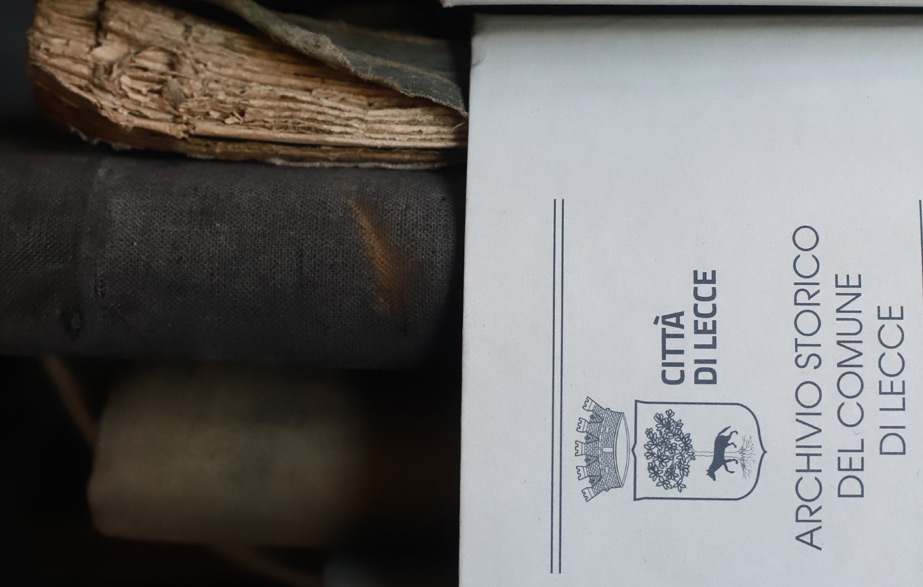
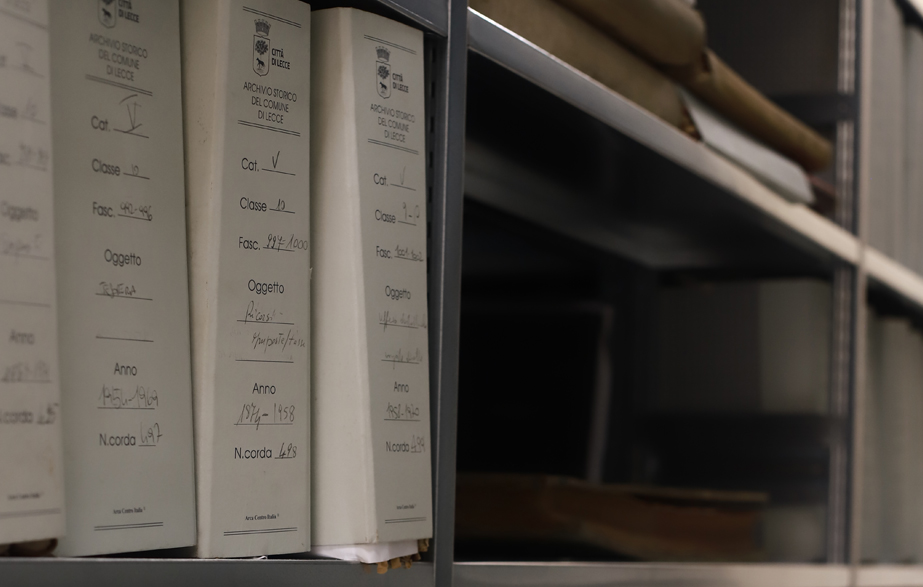
The holdings comprise more than 12,000 archival units — registers, files and folders — covering the municipality’s activities from 1818 to 1980, along with the Civil Status section (1809–1900) and a truly special item: the Libro Rosso of the University of Lecce, a precious 19th-century copy of a manuscript destroyed during the Second World War. Among the rarest pieces, the Archive also preserves a Lecce stone inscription from 1738, the first tangible sign of the civic archive, uncovered during the reorganisation process and now kept in the storage section.
Before this intervention, the documentation was preserved in precarious and fragmented conditions. A partially processed collection, inventoried in the 1980s, was incomplete and outdated; while another group of records, transferred in 2011, remained entirely unprocessed, with no filing system, finding aids or means of consultation.
The recovery work
The recovery carried out by Imago Cooperativa not only reconstructed and rehoused the archival units, but also digitised their descriptions using the Archimista software, restoring coherence and readability to the collection. Among other materials, the catalogue now includes more than 614 payment mandates, 1,229 correspondence registers, 280 council resolutions, 93 financial statements, 214 ledgers, 240 tax rolls and 129 birth registers.
The former Augustinian Convent
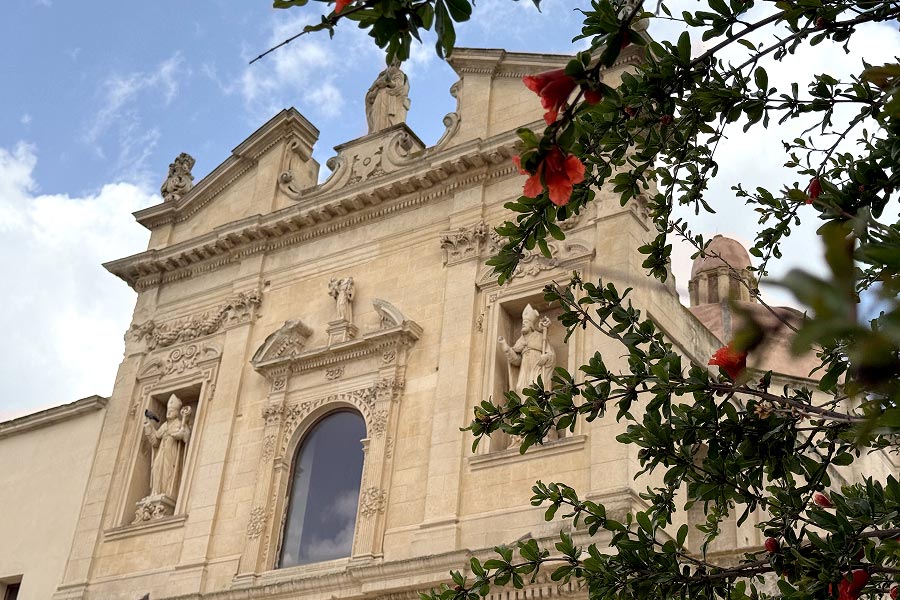
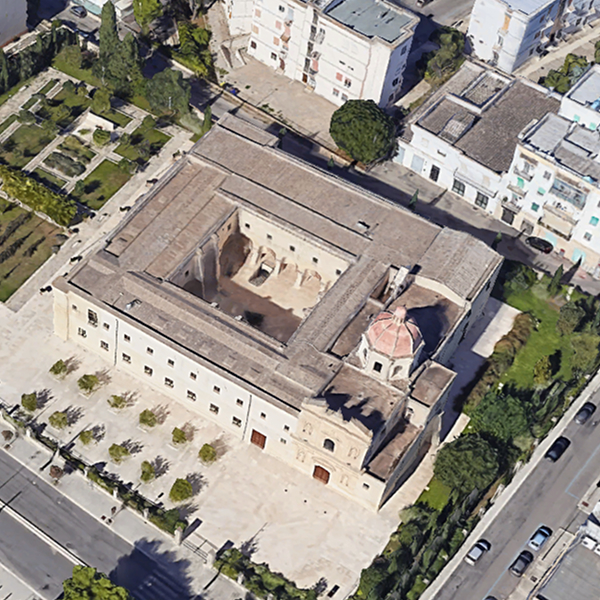
The former Augustinian Convent is a monumental complex of extraordinary beauty, located at the northern entrance to the city.
Here, among ancient architecture and green spaces, the Archive opens its doors to the community in a welcoming and accessible setting that reconnects the documentary heritage with the city’s beating heart.
Within the same complex you’ll also find the OgniBene Library, with its enchanting garden: a haven of calm where you can relax, read outdoors, and be inspired by a rich variety of Mediterranean plants and fragrances.
A place where culture intertwines with the landscape, and history becomes a living experience to be embraced with wonder.